
fbpx
Nurture Your Body, Cherish Your Life ®
Free Shipping On Orders Over $60.00
×

Cart

You see people with healthy and glowing skin. It’s not because they have extra, secret genes. It is likely because they are committed to their daily skincare routine. However, it is overwhelming when you look at the number of skincare products on the store shelves and deciding which one will give you gorgeous, glowing skin. You may ask yourself how many products do you need to have. To make it simple and easy to follow, think of your skincare routine in three steps:

Cleansing.

This the first step of your daily routine to good skincare. Wash your face with warm water or cleanser.  Washing face will help to get rid of dirt, pollutants and other free radicals – not necessarily squeaky clean, you don’t want to wash off healthy oils from your skin.  Be mindful that water or cleanser alters your normal skin PH balance of 5.5

Toning.

You absolutely need to add toner after cleansing to have healthy looking skin. It tightens pores and remove the last trace of impurities left after you wash your face. If you believe facial toners dry skin, use alcohol-free toner, so is not as drying. One of the main benefits of toner is to restore PH balance of the skin rather quickly to 5.5.

Moisturizing.

The third crucial step for healthy skin is moisturizing. Moisturizing will prevent skin damage from outside elements and dehydration.  Most moisturizers contain vitamins, oils and botanical extracts that improve or reduce the fine wrinkles and give the appearance of healthy and smooth skin. Choose a moisturizer without perfume/ alcohol – that will dry the skin. In addition, you should add an eye cream to moisturize the sensitive skin around your eyes.  The right eye cream may reduce or eliminate dark circles and puffiness.

There are a great number of cleansers, toners and moistures out there which may be challenging to pick the right ones. However, in order to choose the right products, it would be beneficial if you know your skin type (dry, oily, or combination). Buy products that work synergically with your skin type.
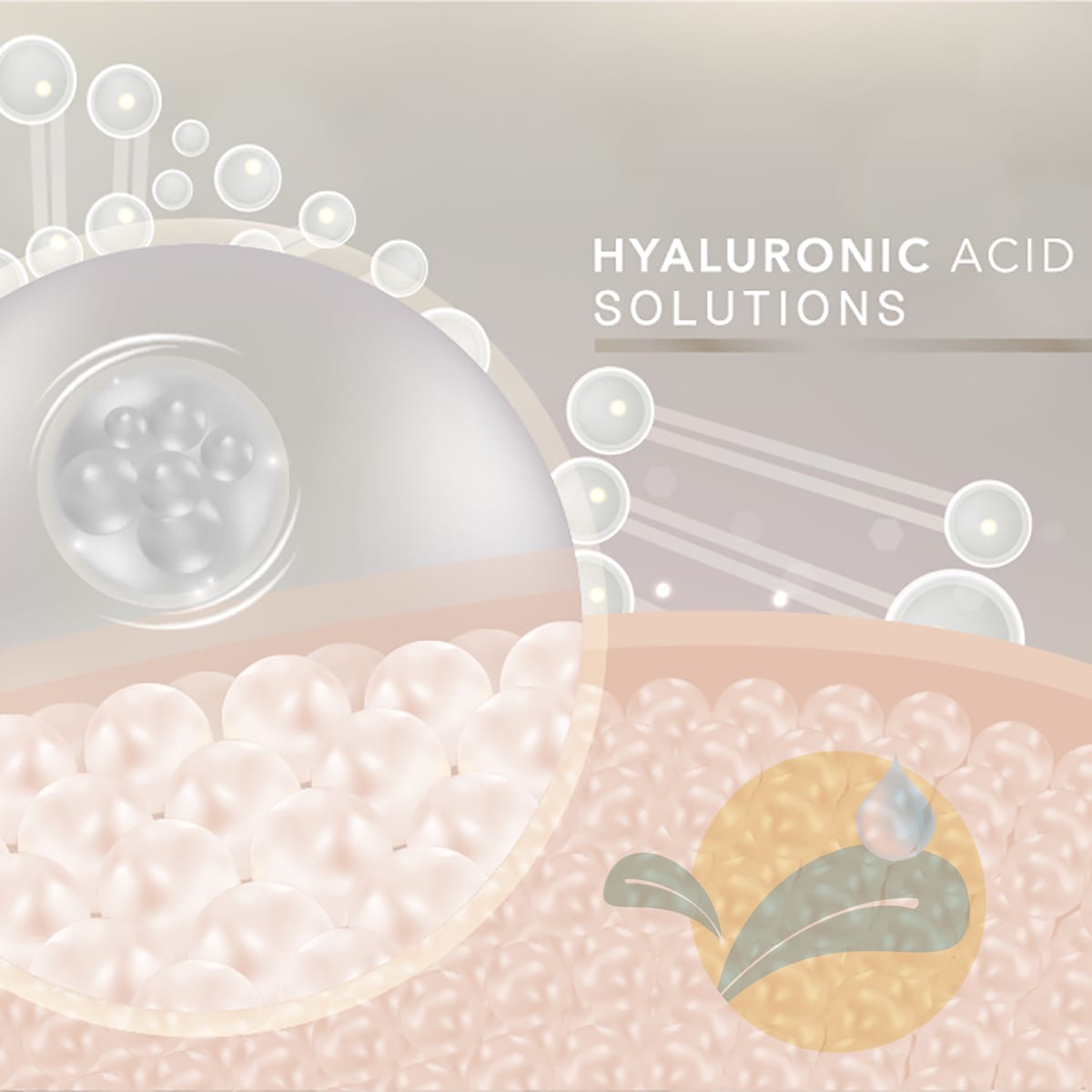

Hyaluronic Acid can be found in skin care products that we use daily – from moisturizers, and creams to cleansers and toners – with claims of youthful, healthier looking skin. And, because it is gentle on the skin, it is recommended for all skin types.

How does it work?

In a nutshell, it is a sugar molecule that is naturally found in our skin. This molecule absorbs moisture, which leads to plumper skin. Use of this substance is important for supple skin, because as skin ages our body doesn’t produce enough Hyaluronic Acid, therefore, skin dehydrates and that leads to formation of fine lines and wrinkles.

Aside from Hyaluronic Acid there are other natural ingredients that act as “humectants” that help to attract water from their surroundings such as Aloe Vera, Glycerin, Amino Acids, Fatty Acids. Hyaluronic acid’s molecules, when applied topically, are often too large to be effectively absorbed into the skin.  Actually, its molecules sit on the skin and absorb moisture to keep skin hydrated.  When the air is too dry, it would be beneficial to have a humidifier handy.  Especially while you are sleeping and do nothing to your skin.

It’s not a moisturizer?

It is important to know that Hyaluronic Acid is not a moisturizer, rather its molecules are able to hold water. Although not clear, some studies suggest that the molecules will hold 1,000 times its weight in water, and of course, some suggest otherwise. But, regardless of how many claims you can find, it is obvious that Hyaluronic Acid is a key ingredient to absorb enough moisture to help keep skin hydrated. 

Consistency is key.

As we all know, skin is resilient, but remember consistency is key.  To notice the maximum benefit, it is essential to maintain your daily skin care. Generally, it takes several weeks to see the difference.  In addition, do not forget to keep your body hydrated – drink plenty of water.

We are surrounded by pollution. Pollution erodes the ozone layer in the upper atmosphere which exposes us to ultraviolet radiation (UV) from the sun. Pollution’s free radicals not only threaten our planet, but these tiny particles penetrate deep through the skin which then cause dehydration and inflammation. Exposure to pollution and UV sunlight will increase dark spots on our skin and make it prone to developing wrinkles.

Moreover, climate has its own impact on our skin. For example, in the Southwest where climate is dry and hot, the environment expedites skin’s premature aging.  Cold climate can make skin dry and brittle.

So, how can YOU protect YOUR skin?
With so many products on the market, it is difficult to pinpoint the ones that will work for your skin type. Plus your skin changes over time due to stress, hormonal fluctuation, water content, medication and age.   

Dry skin:

Having dry skin is common. Tip: Use warm, not hot water, in the shower or bath. Avoid cleansers with alcohol and synthetic fragrance; instead use a rich moisturizer to protect your skin from drying out. Always remember to use sunblock with a higher SPF.

Oily skin:

Your skin naturally produces sebum (skin oil) for protection. Skin feels oily when it is pumping out more sebum than required – happening mostly around the nose, forehead or T section of your face. Tip: Keep your skin clean and wash your face twice a day. Use oil-free foaming cleanser and light moisturizer.

Normal skin:

Your skin tone is fairly even with no visible pores or blemishes and neither oily nor dry. That doesn’t mean you are free from taking care of it! Tip: Wash your face every day to get rid of dead skin and dirt and exfoliate twice weekly.

Sensitive skin:

Sensitive skin is delicate, gets irritated easily and requires tender care. Tip: Use products that contain calming ingredients such as aloe, cucumber, green tea, chamomile, oatmeal and honey.  Wash your face gently with lukewarm water; gently pat dry with clean towel.

Final thought:

Heavy cleansers contain potentially harmful chemicals that could actually make your skin dry and dull. So, before moisturizing or putting on an anti-aging treatment, cleanse your face gently with lower PH (slightly acidic) soap or a gentle cleanser (like Clavé’s Orange Blossom Green Tea Facial Cleaner) with natural ingredients that relax the skin. Wash your face with lukewarm water, pat dry with clean towel.

You might be surprised to find out that there are several ways to apply creams and lotions in order to achieve the result that you are looking for.

Face
First, wash your face with lukewarm water; pat dry with a clean towel. Water washes off dead skin and dirt. Next, apply a small amount of cream to your finger and spread evenly on your face. Gently massage your skin in an upwards motion until the cream is absorbed into the skin. You neither want to tag and pull, nor apply too much pressure. Wait about 10 minutes before you apply makeup.

For the forehead use a gentle circular motion until cream is absorbed into the skin.

Lastly, don’t forget your neck! The skin on your neck is delicate and prone to all of the changes that occur on your face, including wrinkles. Apply cream on your neck in upward motion. 

Eyes
The skin around your eyes is thin and delicate.  Choose an eye cream with the purest and highest quality ingredients.  First, wash the areas around your eyes with warm water. Gently apply pressure with a clean towel to absorb excess water. Next, apply a small amount of eye cream (pea size or less) by using your ring finger only – the muscles in this finger are weaker than other fingers. Most likely you won’t pull or rub too strongly, or apply to much pressure that could damage delicate skin under the eye. Massage from inner (near tear duct, but not too close) to outer corner. Continue dabbing, again from inner to outer corner, until cream is totally absorbed into the skin. Don’t forget to apply cream to your brow bone area located underneath your eyebrows.

Body
Always apply body lotion or body cream after taking a shower or bath – your body will absorb it better. For most people some parts of the body such as hands, elbows and knees require more attention. After you apply lotion or cream, make sure to wait 15 minutes to allow it to absorb fully into your skin before you start to put on clothes. Keep in mind that lotion and cream are both emollients to keep your skin supple and hydrated.  Body cream is heavier than lotion and can be used when your skin is very dry, or to target drier areas.

Remember
It is not the amount of the product you put on your skin but rather the quality of the product. Yes, for organic high-quality creams you pay more but you will achieve far better results.